Look at Sea Isle City's numbers from this past March and you'll find something that shouldn't happen. The median sale price rose 23.1 percent year over year, landing at $1.6 million. In the same month, the average sale price fell 26.7 percent, down to $1.1 million. Same town, same thirty-one days, two headline numbers moving in opposite directions.
That's not a typo and it's not noise. It's the fingerprint of a housing stock being replaced faster than most buyers realize, and it changes what a quoted median actually tells you when you're pricing a purchase on Seven Mile Island.
What's Actually Moving the Median
A median doesn't track how much a specific house gained in value. It tracks the midpoint of whatever happened to sell that month. If the mix of what's selling changes, the median moves even if no individual property changed hands twice.
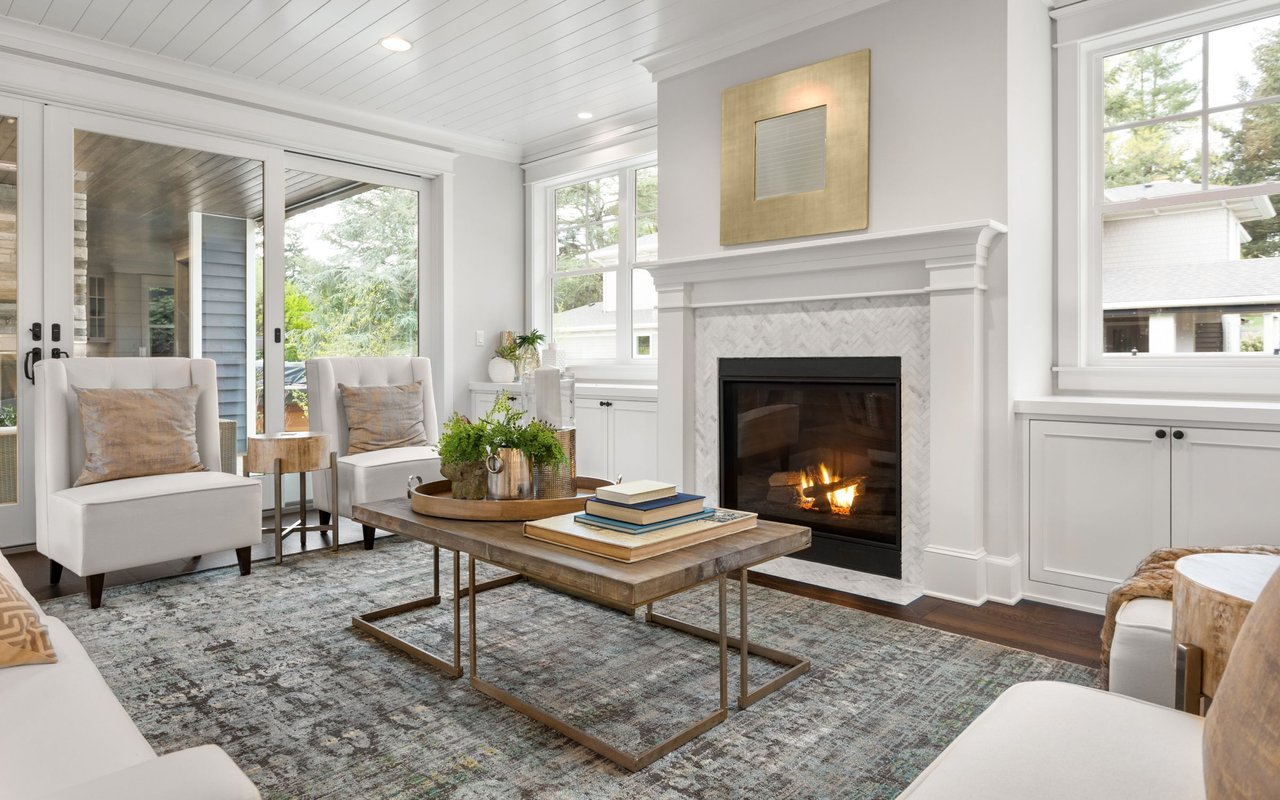
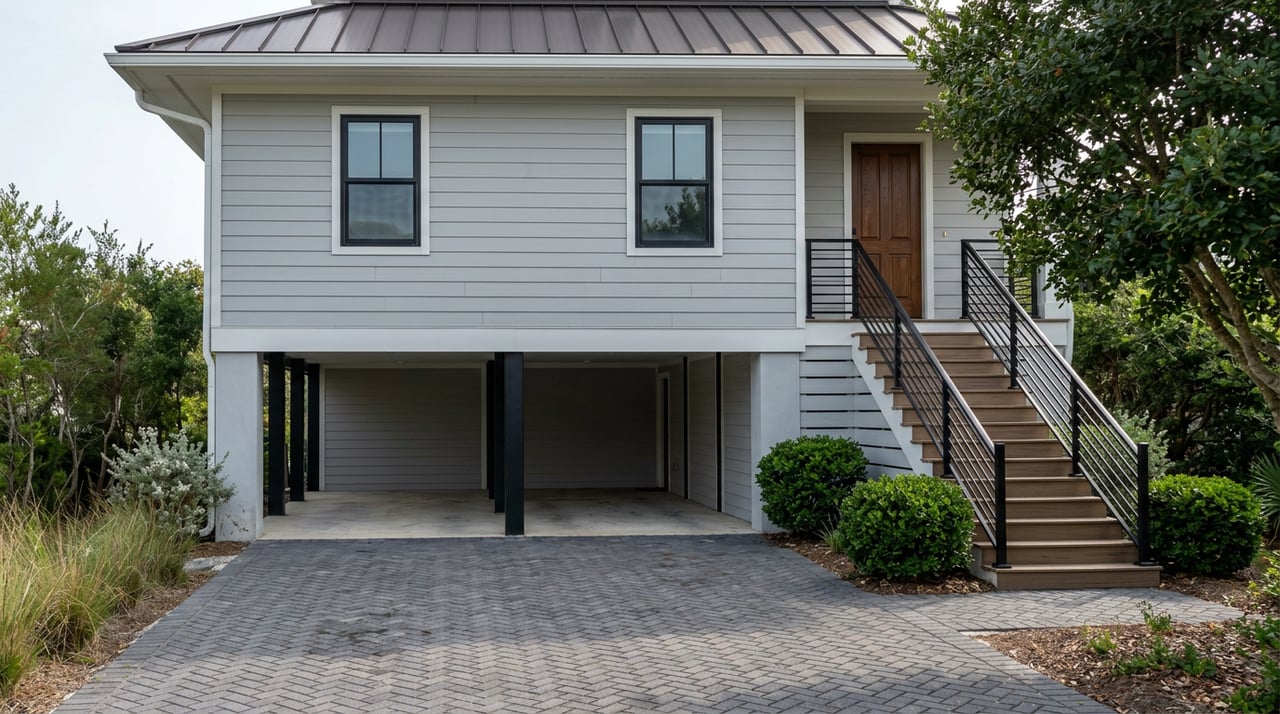
Sea Isle's mix has changed. As reported by The Philadelphia Inquirer, city officials describe the town as essentially built out, with most of the growth in housing units between 1990 and 2020, about 17 percent more units, coming from adding density to existing lots rather than new land. That growth pattern hasn't slowed. It's accelerated into a straightforward pattern: older bungalows come down, side-by-side new construction goes up on the same footprint, often with less yard and more driveway to fit two garages and multiple SUVs.
Here's what that did to the numbers in a single month:
| Metric (March 2026) | Figure | Year-over-year |
|---|---|---|
| Median sale price | $1.6 million | up 23.1% |
| Average sale price | $1.1 million | down 26.7% |
| Homes sold | 11 | up from 5 |
| Median days on market | 20 | down from 119 |
More than twice as many homes sold, and they sold in a sixth of the time. That's consistent with a wave of finished new construction hitting the market at once, priced in a tighter band than the old mix of modest bungalows and the occasional oceanfront trophy. When the outlier mansion sales that used to pull the average upward sit out a cycle, the average drops even while the median, which only cares about the middle of the pack, keeps climbing on the strength of all that new mid-to-high construction.
Zoom out to the whole spring selling season and the pattern holds. For the three months ending in May 2026, the citywide median sale price hit $1.8 million, up 27 percent from the year before. In May alone it reached $2.2 million. Builders time their finished product for exactly this window. Listings that turn up in April and May are routinely marketed as move-in ready for the coming summer, which means the busiest month for closings is also the month stacked with the newest, priciest inventory.
The Small-Sample Trap
Neighborhood-level numbers make this worse, not better. Look at Downtown Sea Isle City specifically, and you'll find a reported median sale price of $1.8 million in January 2026, a jump of 73.3 percent from the year before. That sounds like a submarket on fire.
It's three houses. Three sales, down from four the prior January. A swing that dramatic on a sample that small tells you almost nothing about appreciation and everything about which three sellers happened to close that month. If your agent quotes you a hyperlocal median for a specific block or micro-neighborhood, ask how many transactions produced it before you treat it as a market signal rather than a coin flip.
A Town Rebuilding Around You While You Shop
The price data lines up with what's visible on the ground. Blocks that once held modest older homes now show new construction packed lot line to lot line, with fewer mature trees and less open yard than the housing they replaced. That's a physical description of the composition shift, not a coincidence next to it.
Other signals point the same direction. Jason and Kylie Kelce, the Philadelphia-connected couple whose family has deep local ties, are four years into the wait list for the Sea Isle City Yacht Club and currently sit at No. 78 out of 251, up from No. 149 the year before. Waitlists that long, for a private club with a capped membership, are a pretty reliable marker of demand outrunning supply for anything scarce in this town, docks included.
Down on the commercial side, the Oar House Pub expanded into two additional nearby buildings this year, drawing noise complaints from neighbors and pushback from Mike Monachetti, the owner of longtime local fixture Mike's Seafood. Meanwhile Trinity Community Church of Sea Isle City, a seasonal congregation that has held services at 85th and Landis for 103 summers, has stayed put as one of the few constants residents point to amid the turnover.
Even the affordable housing math reflects the built-out reality. Sea Isle proposed partnering with a mainland town to satisfy its state-mandated affordable housing obligation off-site. New Jersey didn't allow it. There's no more room to solve the problem by building something new and separate. Whatever gets added here gets added by replacing what's already standing, which is the same mechanism pushing the sale price data around.
What This Means If You're Comparing Sea Isle to Avalon or Stone Harbor
If you're cross-shopping Seven Mile Island towns using published medians, the comparison only works if the underlying mix is comparable. Sea Isle's current median is being shaped by an unusually active replacement cycle: older housing stock coming down, new construction going up, and a large share of this year's closings being that new product rather than long-held family houses trading hands. A town with a slower rate of teardown-and-rebuild activity will show a median that behaves more like a traditional appreciation number and less like a snapshot of what got built that quarter.
Ask your agent two questions before you anchor on a headline median: how many of this month's sales were new construction versus resale, and how does the days-on-market figure compare to the same window last year. A steep drop in time on market, paired with a rising median, usually means new inventory is absorbing fast, not that the whole stock is appreciating at that rate.
A Friction Worth Knowing Before You Tour a Specific Block
If you're looking at anything near 46th Street and Central Avenue, ask about the drainage project that's been underway there. Residents have described construction-related vibration and dust affecting their homes during an $881,000 drainage system installation on Central Avenue, and the city is weighing an additional pump station in the $2 million to $3 million range depending on how the current system performs, as reported by OCNJ Daily in March 2026.
On the other side of the ledger, the town just wrapped a major beach replenishment project. Crews placed roughly 479,000 cubic yards of sand between 29th and 55th Streets under a $21.6 million contract funded mostly through the Army Corps of Engineers and the New Jersey Department of Environmental Protection, with Sea Isle contributing roughly $900,000 to $1 million of its own funds. Work finished by mid-July 2026. That's the kind of long-horizon infrastructure spending that underpins values at this price point, and it's worth knowing it happened this year rather than assuming it as background noise.
A Few Questions Buyers Ask First
Does a 27 percent jump in the median mean my specific house of interest is worth 27 percent more than it was last year? No. It means the mix of what sold shifted toward newer, pricier construction. An individual older home's value depends on its own condition, lot, and location, not the citywide median.
Is new construction always the better buy at this price point? Not automatically. New builds command a premium for being turnkey, but a well-maintained older home on a larger lot in a stable location can be the better long-term hold, especially given how little vacant land remains to redevelop.
How do I know if a submarket median I'm quoted is reliable? Ask how many transactions produced it. Anything under ten sales in a given period can swing wildly on the strength of one or two closings, as the January 2026 Downtown Sea Isle figures show.
Prices in a market like this one rarely move for one reason, and the headline number almost never tells the whole story. If you're weighing Sea Isle against Avalon or Stone Harbor, or trying to figure out what a specific block's recent sales actually say about value, Maria Doyle can walk through the underlying transaction data with you block by block. Schedule Your Private Consultation to start that conversation before you make an offer based on a number that might be measuring something other than what you think it is.